

INHERITANCE
Dolcefino Investigates

DAMN LAWYERS

Probate lawyers are supposed to protect families.
Too many are destroying them instead.

Wayne Dolcefino  ·  Investigative Journalism  ·  Houston, Texas
▶  Watch the Series The Allison Case
Scroll
4Episodes
28Families Analyzed
13Years of Patterns
0Cases Resolved on the Merits
All allegations are documented in formal complaints and investigative reports. No content constitutes legal advice. Nothing herein has been adjudicated as a court finding unless stated.
Watch the Investigation

THE LAWYERS WHO WERE
SUPPOSED TO PROTECT
THESE FAMILIES

A probate attorney's first obligation is to prevent unnecessary conflict — not to ignite it. Four episodes documenting what happens when that obligation is abandoned for a contingency fee. Click any thumbnail to watch.

Episode 2
Ep. 2
Episode 2
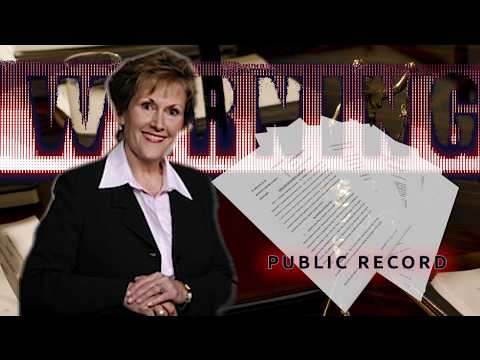
Rigged Arbitration — The Stench of Cronyism

The arbitrator had a 35–40 year undisclosed relationship with opposing counsel. How a compromised proceeding produced a $4 million award against the very clients she was sworn to hear fairly.

Open on YouTube
Episode 3
Ep. 3
Episode 3
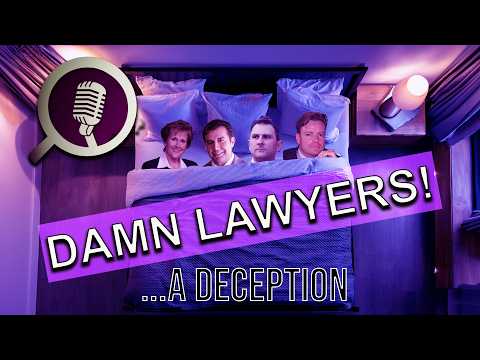
Damn Lawyers — A Deception

Alleged fraud in a widening Houston probate investigation. The deceptions layered into fee agreements, arbitration clauses, and settlement negotiations — things families never knew to look for.

Open on YouTube
Episode 4
Ep. 4
Episode 4
Damn Lawyers — The Probate Plot

The full picture. How probate lawyers allegedly trap grieving families, escalate disputes for profit, and drain estates through fees that never end — and the families who never knew they were pawns.

Open on YouTube
Episode 5
Ep. 5
Episode 5
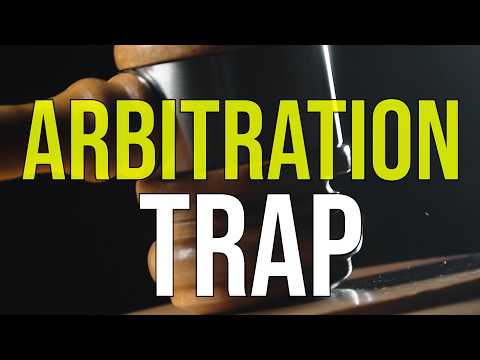
Damn Lawyers: Arbitration Trap

Texas Republicans are gathering in Houston for their state convention. Lots of folks will be there trying to get the politicians to go to Austin to fix stuff in the legal system that is broken. We think our Damn Lawyers investigation is proof the ARBITRATION TRAP needs to be stopped.

Open on YouTube
Victim Testimonial
Gail Echols — "How did my lawyers make more money off my inheritance than I did?"
28Families caught in fee-driven litigation
35%Contingency fee that should never have been signed
$500K+Alleged theft from Robin's estate after her stroke
0Merits rulings across 28 cases analyzed
The Allison Case

A Family That Needed
A Peacemaker.
Instead They Got
A Match.

Dr. Richard Allison — a physician, real estate investor, and father — created a trust in 1989 to provide for his children. When he died in 2017 after a long battle with dementia, Caroline and Richard Jr. simply wanted to understand what they were entitled to under the existing estate plan.

They did not go looking for a fight. What their attorneys withheld from them was critical: as beneficiaries, Caroline and Richard already had rights of access to income from the Family Trust. They did not need to litigate at all. That fact was never disclosed.

Instead, Borunda and Abaza immediately filed a will contest — the most aggressive nuclear option available — without explaining that losing could permanently disinherit them and their children. The escalation forced Robin's hand. She went straight for a disinheritance clause. A family that could have resolved things with a conversation was now in a multi-year legal war — one the attorneys had every financial reason to sustain.

After the first mediation, Robin asked for an apology. Caroline was ready to drop the case entirely. That's when Borunda pulled her into a private, off-the-record meeting and told her the case was "going to trial" and that she would "go bankrupt funding it." He said this knowing there was little to no evidence supporting trial — and while withholding the fact that Robin was signalling settlement. This is self-dealing: an attorney using superior knowledge of the case and the law to steer a client against her own interests, for the attorney's financial benefit. It is expressly prohibited in the legal profession. Borunda skirted the requirement to send Caroline to independent outside counsel, hoping she would never discover the omission.

Borunda convinced Caroline to convert from hourly billing to a 35% contingency fee — transforming a $70,000 legal bill into a potential $1.4 million payday. The new agreement contained a hidden mandatory arbitration clause, stripping Caroline of her jury rights and consumer protections without disclosure. By this point, Caroline had already funded the entire discovery phase — which gave her attorneys full visibility into her father's estate and confirmed how much money was at stake for them.

When the second mediation produced a rushed settlement, the attorneys gave up approximately $15 million in assets — then turned around and pursued a $4 million fee award. The arbitrator they selected, Anne Ashby, had a 35–40 year undisclosed personal and financial relationship with opposing counsel. When the rigged arbitration produced the award the attorneys expected, they did not believe the Allisons would ever discover it. They were wrong.

What followed was a Bill of Review — a petition to vacate the judgment on grounds of contrived fraud: a proceeding designed to look legitimate on the surface while orchestrating a theft underneath, and deliberately difficult to detect. Wayne Dolcefino and his investigative team caught them all red-handed.

The prolonged litigation contributed to Robin suffering a catastrophic stroke. She is now permanently brain damaged and under guardianship — her own estate now being depleted by the attorneys managing that guardianship. Robin's attorney, Michael Collins, had already billed approximately $500,000 in legal fees during the underlying probate litigation. Meanwhile, his legal assistant Deborah Jordan had befriended Robin after the settlement — and allegedly convinced Robin to grant her power of attorney over her estate. After Robin's stroke, according to court filings in the guardianship proceedings, Deborah Jordan is alleged to have absconded with prized possessions and assets totalling over $500,000.

Robin retained control over the marital trust and her own trust. But she lost her family, her health, and — according to the court record — much of what remained to someone who moved in the moment her attorney introduced them. Dead people cannot defend their estate plans. And the people left behind cannot always defend themselves either.

"We didn't realize until much later that their interests had nothing to do with our well-being, and everything to do with how much money they could take from my dad's trust."
— Caroline Allison, GlobeNewswire, March 2026
2017

Dr. Richard Allison dies. Caroline and Richard Jr. ask Robin for basic information about the estate — not knowing they already had rights of access to the Family Trust under the existing estate plan.

2019 — The Unnecessary Escalation

Attorneys file a will contest. Never disclosed: the clients already had trust access rights and had no reason to litigate. The nuclear option triggers Robin's disinheritance clause.

2020 — 1st Mediation: Robin Asks for an Apology

Robin signals she wants peace. Caroline is ready to drop the case. Borunda pulls her into a private off-the-record meeting — tells her it's going to trial and she'll go bankrupt. He withholds that Robin is signalling settlement. This is self-dealing, expressly prohibited under legal ethics rules.

Fee Switch — The Hidden Trap

Borunda convinces Caroline to convert from hourly to 35% contingency. A new agreement with a hidden mandatory arbitration clause strips her jury rights without disclosure. Her $70,000 legal bill becomes a potential $1.4M payday for her attorneys — who by now know the full value of her father's estate through discovery she funded.

2nd Mediation — Rushed Settlement

Attorneys give up approximately $15 million in assets in a rushed morning settlement — then immediately pursue a $4 million fee award from what remained.

2024 — Rigged Arbitration & $4M Award

Arbitrator Anne Ashby — with a 35–40 year undisclosed relationship to opposing counsel — rubber-stamps the attorneys' brief as a $4 million award. The attorneys assumed the Allisons would never discover the rigged proceedings.

Bill of Review — Contrived Fraud

The Allisons file a Bill of Review to vacate the judgment on grounds of contrived fraud — a proceeding engineered to look legitimate while orchestrating a theft, deliberately hard to detect. Dolcefino's investigation exposed what the lawyers never expected anyone to find.

Robin's Stroke — Guardianship Opens

Robin suffers a catastrophic stroke — permanently brain damaged. Now under guardianship, her estate is being depleted by guardianship attorneys. Michael Collins had already billed ~$500K in legal fees. His legal assistant Deborah Jordan, who befriended Robin after the settlement and obtained power of attorney, is alleged in court filings to have absconded with over $500K in assets and possessions.

2026 — Active Investigation

Bar complaints filed. FTC complaint submitted. Bill of Review pending. Four-part Dolcefino series published. Robin retains the marital trust and her trust — but has lost her family, her health, and much of what remained. Investigation ongoing.

"
Think of my father's estate as a whale carcass. On one side of the carcass are the great whites taking big chomps out of it — and on the other side are the piranhas nipping, nipping, nipping away. My father's estate was a feeding frenzy for attorneys.
— Caroline Allison

"When they launched us into a will contest, you are basically saying 'we are starting over — let's pretend as if there's no estate plan.' This means they could say that my brother and I were getting nothing. And it was somewhat true, even though on paper we were getting everything."

— Caroline Allison

"They took advantage of my father's dementia. And they took advantage of our family dysfunction. And they did this at a time we were grieving from the unexpected loss of our father. I want people to know our story — to learn from it."

— Caroline Allison
The Mechanism

LAWYERS SHOULD BE
PEACEMAKERS. INSTEAD
THEY BECAME DESTROYERS.

A family that walks into a probate attorney's office in grief should walk out with a path to resolution. Instead, too many walk into a machine designed to escalate, prolong, and extract — at the cost of the very family the attorney was hired to serve. This is how it works.

1
Grief + Withheld Rights

Family loses a parent. Attorney withholds that clients already have rights under the estate plan — because knowing would end the case before it starts.

2
Contingency Hook

35% contingency pitched as "pro bono." Hidden arbitration clause buries their jury rights. Clients sign away consumer protections without knowing it.

3
Self-Dealing

Attorney uses superior knowledge of the case and law to steer clients away from settlement — for the attorney's financial benefit. Prohibited by ethics rules. Never disclosed.

4
Rigged Arbitration

Case funnelled into arbitration with an undisclosed crony. The proceeding looks legitimate. The outcome is predetermined. Contrived fraud is designed to be invisible.

5
Family Destroyed

Dead people can't defend their estate plans. Families lose inheritances, legacies, health, and each other. The attorneys collect and move to the next family in grief.

Contrived Fraud — What It Means Contrived fraud is a proceeding engineered to look legitimate on the surface while orchestrating a theft underneath. It is deliberately designed to be hard to detect. In the Allison case: the will contest had the appearance of legitimate litigation. The fee switch looked like a routine contract amendment. The arbitration appeared to be a neutral proceeding. Each step, viewed in isolation, could be explained away. Viewed together — and exposed by Dolcefino's investigation — they reveal a coordinated scheme that destroyed a family, left a woman permanently brain damaged, and erased the legacy a father spent his life building. Attorneys are supposed to be the ones who prevent this. In the Allison case, they were the ones who caused it.
Robin's Law — Legislative Reform

ROBIN'S LAW:
LAWYERS SHOULD
PREVENT FIGHTS —
NOT START THEM.

A probate attorney should be the first person in the room urging resolution — protecting a family's legacy, not monetizing their grief. Robin's Law would remove the financial incentive to do otherwise. When lawyers are paid by the hour, their interest is aligned with yours. When they take 35% of whatever they can extract, their interest is aligned with the fight.

Attorneys have a duty to prevent unnecessary litigation — not to encourage it. A lawyer who walks a grieving family into a will contest without disclosing that it is unnecessary, disproportionate, or contrary to the client's own interests has violated their most basic professional obligation. Contingency fees make that violation profitable. Hourly fees remove the incentive entirely.
Dead people cannot defend their estate plans. A contingency fee attorney has a direct financial incentive to challenge, destroy, or circumvent the estate plan a person spent their life building. The deceased cannot appear in court to defend their intentions. Their family is left to fight without knowing what rights they already had.
Advice follows compensation. An attorney on 35% contingency earns nothing if the case settles early. They earn millions if it escalates and drags. Every recommendation they make — file a will contest, convert to contingency, reject settlement — is contaminated by that financial incentive. Clients never know it.
Families don't know their existing rights. In the Allison case, the clients already had rights of access to the Family Trust under the existing estate plan. Their attorneys withheld this. A family that needed no litigation was charged 35% of a multi-million dollar estate to litigate a case that never needed to be filed.
Contingency fees encourage destroying family legacies. The higher the conflict, the higher the contingency payout. Attorneys have a structural incentive to challenge valid estate plans, escalate disputes between family members, and prolong cases — erasing the legacy the deceased intended to leave.
California already bans this. California law prohibits contingency fees in both family law and probate matters. Texas families deserve the same protection. There is no access-to-justice argument for contingency fees in inheritance disputes — the assets already exist. The only beneficiary of contingency probate fees is the attorney.
Proposed Legislation — Texas
Robin's Law — Probate & Family Fee Protection Act

Extend Texas's existing ban on contingency fees in divorce and child custody to cover all probate litigation, trust disputes, and will contests. The entire family law category must be consistent: if escalation incentives are too dangerous in custody disputes, they are equally dangerous when a deceased person's estate plan — and family legacy — cannot defend itself in court.

Proposed Legislation — Texas
Attorney Accountability & Complaint Transparency Act

Require attorneys to disclose in plain language all rights the client is waiving before signing any fee agreement or arbitration clause. Mandate referral to independent outside counsel before any mid-case fee conversion. Eliminate time-bar defenses where attorney fraud or concealment is involved. Require written reasoning for all State Bar complaint dismissals.

Proposed Legislation — Federal
Arbitration Fairness Act — Family & Probate Edition

Ban mandatory pre-dispute arbitration clauses in attorney retainer agreements for probate, trust, and estate matters. Restore Seventh Amendment jury trial rights and consumer protections to families navigating inheritance disputes.  Allow opt out of the arbitration clause at any time for any and all contracts, giving consumers more choices for dispute resolution..

The Dirty Little Secret

ARBITRATION IS THE TRAP
ATTORNEYS DON'T WANT
YOU TO UNDERSTAND

In Caroline's own words — what she learned about binding arbitration that every family must know before signing anything.

What You Give Up When You Sign

When you sign a contract with binding arbitration, you don't get a public courtroom with an elected judge subject to public scrutiny. You end up with a private arbitrator — with little to no ability to properly vet that person.

You cannot look up their past cases. You cannot interview them. You cannot speak with former clients from prior proceedings. The entire process is private and confidential. This makes it rife for fraud.

You are 100% reliant on the arbitrator's own disclosures — and you have to simply trust that those disclosures are accurate. The Allisons trusted. The arbitrator had a 35–40 year undisclosed relationship with opposing counsel.

What Attorneys Already Know

Attorneys know exactly what a sham arbitration is. They say it among themselves: "Arbitration is Arbitrary." But they told the Allisons this only after the Allisons lost their case.

Many attorneys say they will not take cases in arbitration — because it is expensive, outcomes are far less predictable, and there is no meaningful appeal. But they put arbitration clauses in their own fee agreements.

If an attorney insists on arbitration to resolve a fee dispute with you — the best thing you can do is walk out their door. That clause is there to protect them, not you.

What the Allison Judgment Could Mean for All Texans

The lawless rulings and lawless judgment the Allisons received don't just harm them — they muddy the laws for everyone in Texas.

As the judgment currently stands, it could be interpreted as using arbitration as a tool for a judgment creditor to breach protected spendthrift trust assets — assets that the law is specifically designed to shield from exactly this kind of attack. The judgment was entered against Caroline and Richard personally, but an innocent party that was never sued — their father's estate — is under attack.

This sets a dangerous precedent. Other creditors and attorneys could point to this case as the one that allowed arbitration to be weaponized against protected trust assets. That is bad for every Texan with a trust, every family with a legacy to protect, and every estate plan that was built to withstand exactly this kind of assault.

The Cost of a Fraudulent Award

Because the arbitration award is allegedly fraudulent, overturning it requires filing a Bill of Review — a separate proceeding — after exhausting the appellate process. This is expensive, extraordinarily hard to do, and takes many years.

Had the Allisons been in a public court, a jury would very likely have ruled in their favor. Juries are not sympathetic to attorneys suing their own former clients over fee disputes. Attorneys know this. That is precisely why they put arbitration clauses in their fee agreements.

"What I witnessed in arbitration — and especially during trial — was the full extent to which, by our own attorneys' admission, they had hoodwinked us. I thought Jorge just lied about the contingency fee conversion. But I discovered all the facts they withheld. I didn't even understand my father's estate plan or the rights I had as a beneficiary. Arbitration is the dirty little secret attorneys don't want you to know about."

— Caroline Allison
D Wayne Dolcefino Investigative Journalist

The Journalist Behind
the Investigation

Wayne Dolcefino is one of Texas's most recognized investigative journalists, with decades of award-winning work exposing institutional corruption, government failures, and predatory practices targeting vulnerable Texans.

The Damn Lawyers series is the most comprehensive investigation into Texas probate attorney misconduct ever published — four episodes, multiple expert reports, formal bar complaints, and a family's multi-year fight to expose a system that profits from grief.

Dolcefino Consulting continues to investigate probate attorney conduct across Houston and Texas. If your family has a story, they want to hear it.

Dolcefino.com ↗
Take Action

WHAT YOU
CAN DO TODAY

Probate lawyers should be protecting families — not destroying them. Share the series. Support Robin's Law. Contact your legislators. Every family that learns from the Allisons is a family that doesn't become the next one.

Has a probate attorney destroyed your family instead of protecting it? Visit StopLegalBullying.com — the advocacy movement founded by the Allisons. When the Process Becomes the Punishment, It's Not Justice.